Gerrit Niezen

reading

Oh boy, I skipped a whole three weeks of week notes. Oh well, there goes another new year's resolution. Why do I keep on making resolutions? I wrote these notes mostly for myself, and publish them publicly so that I'm forced to put them into a mostly coherent format. I do hope if you find any of them helpful that you'll comment down below.

What I read this week month

Text is king by Adam Mastroianni

Adam has a great blog called Experimental History, where he covers science-related stuff just a little bit differently. Recently he wrote about how great reading books really is:

Finishing a great nonfiction book feels like heaving a barbell off your chest. Finishing a great novel feels like leaving an entire nation behind.

In an age of short-form content, reading a book is still worth it:

in the long run, books are all that matter. Podcasts, films, and TikToks are good at attracting ears and eyes, but in the realm of ideas, they punch below their weight. Thoughts only stick around when you print them out and bind them in cardboard.

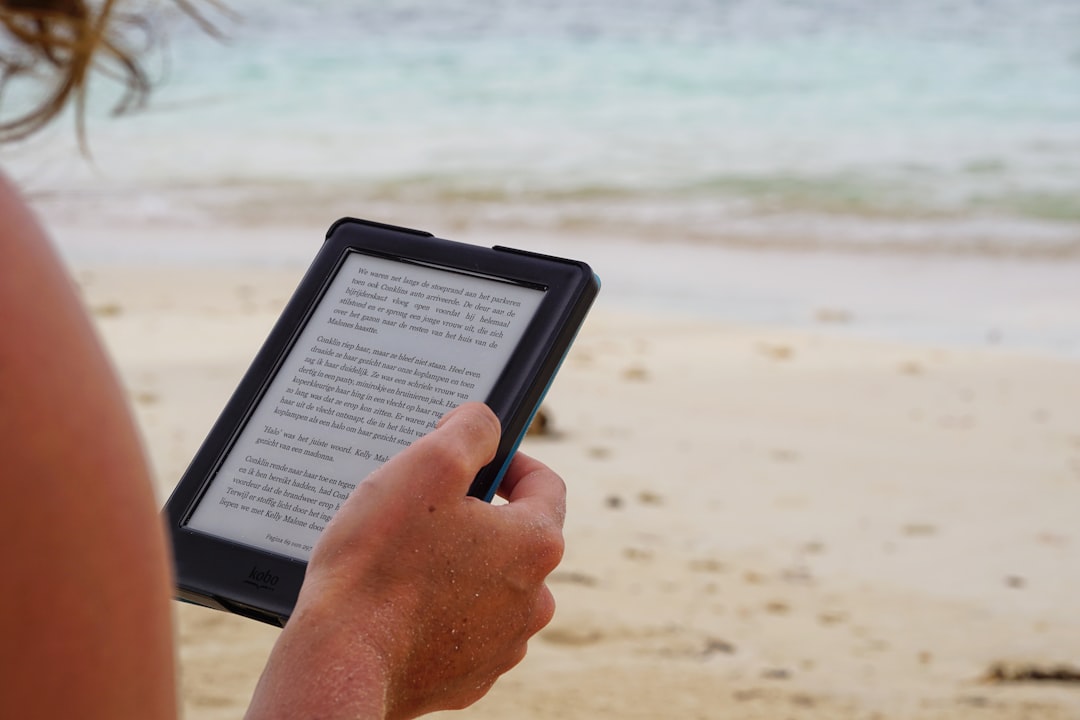
I'm really struggling with reading books at the moment. It's too easy to just read an article on Readwise (my read-it-later app of choice) instead – I have more than a hundred articles saved there, and they feel more manageable, more bite-sized. But I wonder if that's exactly the trap Mastroianni is describing: optimising for consumption over retention. There are six books currently scattered around the house that I'm in the process of reading, and yet somehow I always reach for the phone first. I think what's missing is any kind of deliberate reading ritual – a time and place I associate with it. If you've found something that works for you, I'd genuinely love to hear it.

Thoughts on Go vs. Rust vs. Zig by Sinclair Target

I've been programming in Zig on and off since at least 2023, and what I've seen from Go and Rust this article makes sense. I especially love this sentence:

Zig has a fun, subversive feel to it. It's a language for smashing the corporate class hierarchy (of objects). It's a language for megalomaniacs and anarchists. I like it.

I like Zig too! It feels like a much better C. More so than what C++ ever did.

What's Working: How Denver's Art Gym Went From Private Passion Project to Artist Co-Op – Colorado Sun

There's this makerspace in Denver called the Art Gym that recently became a member co-op. My local hackspace is also run almost like a co-op, where members make decisions together (although there are directors chosen each year to have the final say and be responsible for the day-to-day workings). The article lists some good ideas on how to run these spaces:

All that equipment presents a liability issue, and the building must be staffed by two people trained to keep an eye on things at all times. Every member is required to volunteer a set number of hours.

A standard membership costs $135 per month and requires a commitment of 12 hours per month as a monitor.

That's a lot more expensive than our local hackspace, but it's also a much bigger space with more expensive equipment. The mandatory volunteer hours idea is interesting – I wonder if it would work at the hackspace? It could get people more involved, instead of just attending open nights.

Why There's No European Google? – Ploum

Ploum has a great article discussing the differences between European and American tech. One thing I learned was that the Web basically won because Gopher was proprietary at the time:

Gopher's creators wanted to keep their rights to it and license any related software, unlike the European Web, which conquered the world because it was offered as a common good instead of seeking short-term profits.

And while it's easy to think that most modern tech is invented in the US, he gives great examples of truly foundational tech that don't fit the usual tech startup or big tech mould:

  • The Web was invented by a Brit and a Belgian at CERN in Switzerland
  • Linux and Git were invented by a Swedish-speaking Finn
  • Mastodon was invented by a German student born in Russia
  • VLC was invented by a Frenchman
  • OpenStreetMap was invented by a Brit
  • LibreOffice is maintained by a German institution

It's a useful corrective to the default narrative.


Looking back at this month's reading, it's been a bit all over the place. Maybe I should rather start grouping my blog posts by theme, even if that means that it takes me a couple of months to get back to some highlights that I've made.

#hackspace #reading #programming #tech

Comment on this post

Feature image

I'm working out of a co-working space in town today, and walked into a bookshop during my lunch break. Yes, a physical bookshop. You know they still exist, right?

Unfortunately there is only one independent bookshop left in Swansea and that one is in the lovely seaside village of Mumbles, not in the town centre. I was walking around in Waterstones, one of the larger bookstore chains in the UK. The one in Swansea is inside the old Carlton Cinema, a historic building with a beautiful glass facade.

They do have a pretty extensive collection of books, and I noticed the following ones which piqued my interest:

Let me know in the comments if you can guess the thread that ties these authors together! 😜

#Reading

Comment on this post

Feature image

If you have an e-reader/Kindle, and you haven't yet had a look at Standard Ebooks, do yourself a favour and go there now.

Depending on where you are in the world, copyright only expires 50 to 100 years after the creator's death – crazy if you really think about it. In any case, that means hat you won't find any recently written books on Standard Ebooks, but you will find some great classics. Here are some that I still want to read, in no alphabetical order by author:

#Reading

Comment on this post

I'm a little bit behind on my 2018 Goodreads Reading Challenge, but as we're now a month past the halfway mark of 2018, I thought I'd do a quick roundup of my favourite three books of the first half of the year:

  • The Divide, by Jason Hickel: I think about this book very often. It clearly explains why there is global inequality and that development aid is not the solution.
  • The Year of Less, by Cait Flanders: A delightful little book that describes our struggles with consumerism, why we do it and how to stop.
  • Jupiter War, by Neal Asher: the final book in the Owner trilogy, a heavy sci-fi series full of chaos and destruction. Not for the faint of heart.

“In the US, the portion going to the top 1 per cent more than doubled from 8 per cent in 1980 to 18 per cent today. Britain witnessed a similar jump during this period, with the share claimed by the richest growing from 6.5 per cent to 13 per cent.” ― Jason Hickel, The Divide ―

#Reading

Comment on this post

Feature image

I can't quite remember how I came across this comic series called Incredible Doom, but it's brilliant. It's about a group of '90s kids getting up to things on the early internet. I feel I can relate ;)

It's created by Matthew Bogart, and the best way to get them is by supporting him on Patreon. I only joined his Patreon recently, but was able to get the back issues in his web shop[1].

You can read all the issues online for free, but I would seriously suggest you join his Patreon as the print issues are so cool! The printed format reminds me a lot of Field Notes, and is similar in quality. Each issue has a “feely”, an artifact from the comic brought into the real world.

incredibleDoom2

He also gives regular updates on his Patreon with work-in-progress videos, and you get access to a bunch of e-books with some of his older work. I was very surprised to even get a personalised video message when I joined. If you were a '90s kid on the early internet, do yourself a favour and read the first issue online.


  1. currently 50% off ↩︎

#Reading

Comment on this post

Feature image

There has been a noticeable trend from people reading blogs towards reading e-mail newsletters instead. I use Feedly to subscribe to blogs[1], but if you don't use a blog reader I guess e-mail makes more sense. Here are a few newsletters that make it into my inbox, even if I prefer blogs.

  • Offscreen Dispatch is a once-a-week newsletter with an assortment of products and articles on design and the web by Kai Brach, maker of Offscreen magazine. Coincidentally Offscreen is also my favourite magazine at the moment.
  • The Prepared is a manufacturing newsletter targeted at engineers and entrepreneurs by Spencer Wright, who also hosts The Prepared podcast.
  • Sunday Dispatches is a little bit of everything by Paul Jarvis. He usually writes about freelancing and small businesses.

  1. Hint: You can subscribe to this blog by clicking the Subscribe link at the top of the page. ↩︎

#Reading

Comment on this post

Feature image

I use Goodreads to keep track of the books I've read. You may notice on my Goodreads profile that I joined their 2018 Reading Challenge. This is the second year that I've done it, as it gives that extra bit of motivation to continue my reading habit:

Just by building a tiny habit of reading at least 30 minutes per day I have already read 21 books this year ✊ https://t.co/Fuw2wc56MZ

— Gerrit Niezen (@gendor) October 5, 2017

I prefer to get my books from the library, but sometimes being able to immediately start reading a book I just found is great on Kindle. I also use the highlight function on Kindle, and receive a daily digest of recent highlights in my inbox, courtesy of Readwise.io. And of course, when I finish a book on Kindle, it automatically gets marked as read on Goodreads! That said, nothing beats holding a physical book in your hands.

#Reading

Comment on this post